
future of online advertising
Future of Online Advertising
The future of online advertising is evolving faster than ever, driven by artificial intelligence, changing consumer behavior, and new privacy regulations. Businesses that understand the future of online advertising will be better positioned to reach their target audience, improve return on investment (ROI), and stay ahead of the competition. As technology continues to advance, marketers must adapt their strategies to remain relevant in an increasingly digital world.
Why the Future of Online Advertising Is Changing
The advertising industry is shifting away from traditional methods toward more personalized and data-driven campaigns. Consumers expect relevant content, seamless experiences, and greater privacy when interacting with brands online. At the same time, search engines and social media platforms are introducing smarter algorithms that reward quality content and meaningful engagement.
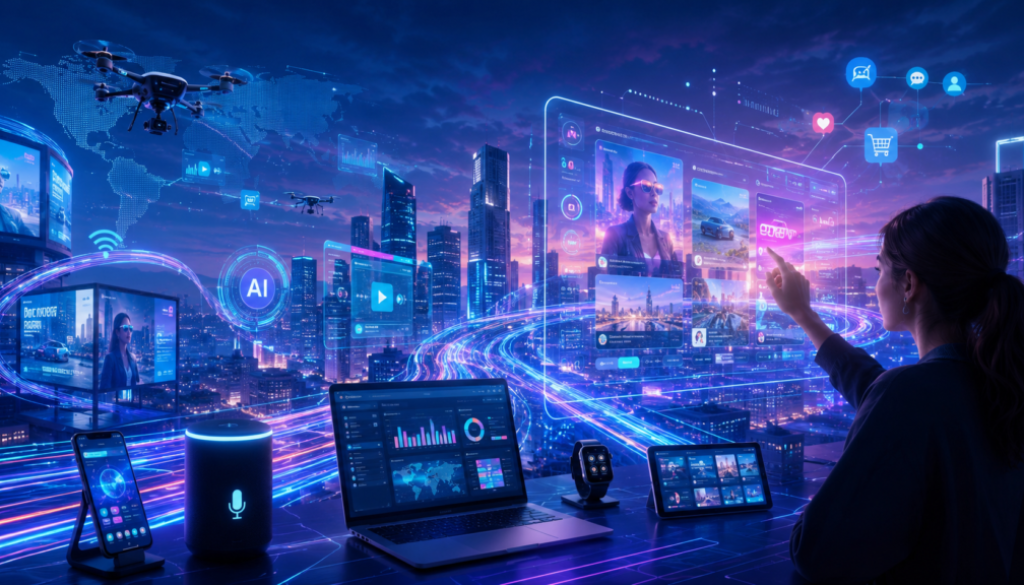
Artificial intelligence, machine learning, automation, and predictive analytics are transforming how businesses create, manage, and optimize advertising campaigns. These innovations allow marketers to target the right audience at the right time with greater accuracy than ever before.
Future of Online Advertising: Key Trends to Watch
1. Artificial Intelligence Will Lead Campaign Optimization
AI-powered advertising tools are becoming essential for businesses. They can analyze user behavior, optimize bidding strategies, generate ad copy, and improve audience targeting in real time. This reduces manual effort while increasing campaign performance and return on investment.
2. Personalized Advertising Will Become More Important
Modern consumers prefer advertisements that match their interests and needs. Businesses will increasingly rely on first-party data, customer insights, and behavioral analytics to deliver personalized experiences without compromising user privacy.
3. Video Advertising Will Continue to Grow
Short-form videos on platforms like YouTube, Instagram Reels, Facebook, and TikTok are generating higher engagement than traditional display ads. Brands that invest in creative video advertising will have a greater opportunity to capture audience attention and improve brand awareness.
4. Voice and Visual Search Advertising
As voice assistants and image-based search become more popular, advertisers will optimize campaigns for conversational keywords and visual discovery. Businesses that prepare for these emerging search behaviors will gain a competitive advantage.
5. Privacy-First Marketing
With the gradual removal of third-party cookies and stricter data privacy regulations, businesses must focus on collecting first-party customer data through newsletters, loyalty programs, and website interactions. Transparent data practices will build stronger customer trust.
6. Automation Will Improve Efficiency
Marketing automation platforms will handle audience segmentation, campaign scheduling, budget allocation, and performance optimization. This enables businesses to focus more on strategy and creative development rather than repetitive manual tasks.
How Businesses Can Prepare
To succeed in the changing digital landscape, businesses should prioritize high-quality content, improve website performance, invest in SEO, and build strong customer relationships. Diversifying advertising channels across search engines, social media, email marketing, andvideo platforms also reduces dependency on a single platform.

Regular performance analysis is equally important. Monitoring campaign data allows businesses to identify opportunities, optimize budgets, and improve conversion rates over time.
Benefits of Embracing the Future
Businesses that adapt to new advertising technologies can enjoy several advantages:
* Better audience targeting
* Higher conversion rates
* Improved customer engagement
* More efficient advertising budgets
* Increased brand awareness
* Better return on investment
* Sustainable long-term business growth
Common Challenges
Although new technologies create opportunities, businesses may also face challenges such as increasing competition, evolving platform algorithms, privacy regulations, and rising advertising costs. Staying informed, continuously learning, and testing new strategies are essential for maintaining success.
Conclusion
The future of online advertising will be shaped by artificial intelligence, automation, personalized experiences, privacy-focused marketing, and engaging video content. Businesses that embrace innovation while focusing on customer value will be better equipped to compete in the digital marketplace. Rather than chasing every new trend, companies should build flexible marketing strategies that can adapt as technology evolves.
If you’re looking to future-proof your business with modern advertising strategies, consider working with a Digital Marketing Strategist in Kannur who can help you create data-driven campaigns, improve online visibility, and achieve sustainable business growth through customized digital marketing solutions.
